The word placemat covers four quite different products, and choosing between them is really a choice about how long the mat needs to survive. A diner that goes through a thousand covers a week and a boutique hotel setting a formal table have almost nothing in common in what they should order. This comparison puts the four main placemat constructions side by side, disposable paper, laminated paper, woven vinyl, and fabric, so you can match the material to the way it will actually be used rather than to a picture in a catalog.
Disposable paper: the volume workhorse
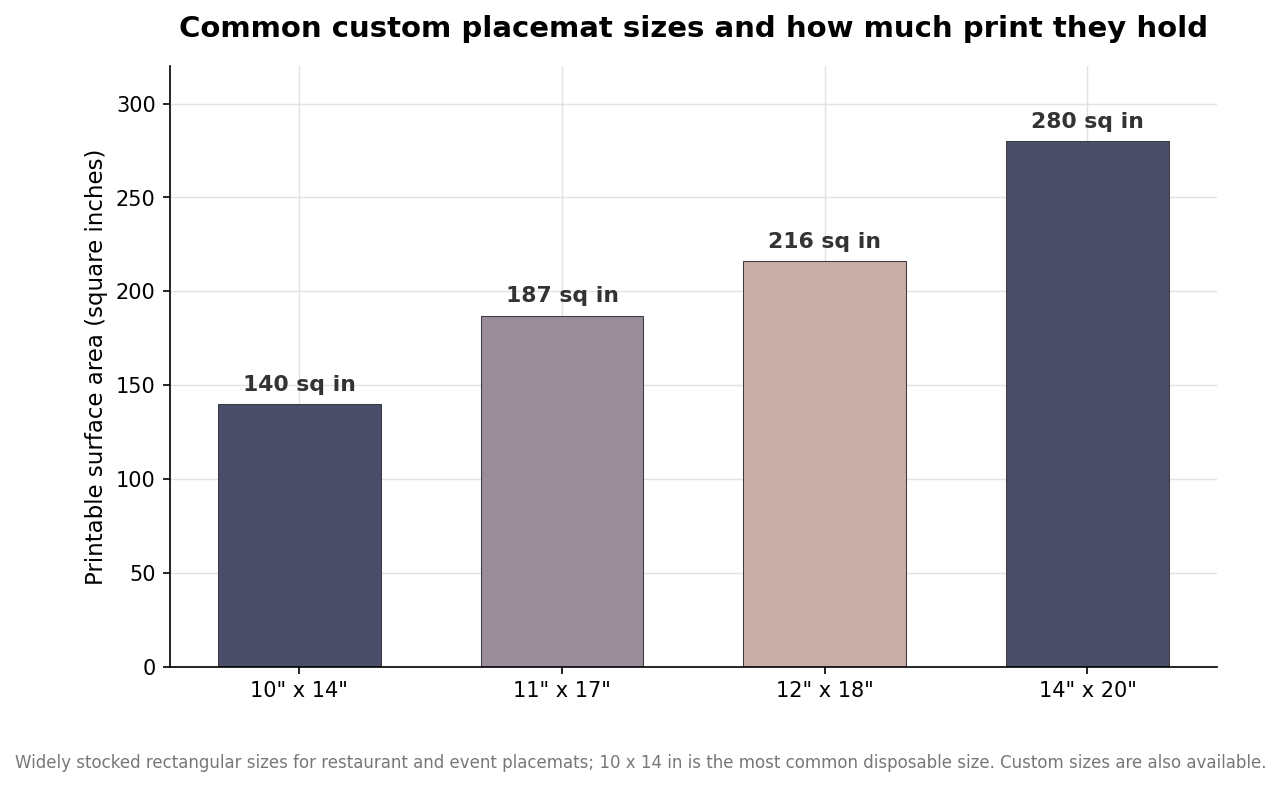
Disposable paper is what most people picture, and for good reason: it is the cheapest per unit and the best surface for printing menus, promotions, kids’ activities, and event branding that only needs to last one sitting. The most widely stocked size is 10 by 14 inches, with 11 by 17, 12 by 18, and 14 by 20 inches common when you want more room for a menu layout. Stock weights typically run in the 40 to 60 pound range, with the heavier sheets feeling substantially more premium under a plate. You also choose a paper character to suit the food: kraft for a natural, eco-leaning look, greaseproof or parchment stocks that resist oil from fried and buttery dishes, and wax- or poly-coated papers that shrug off moisture. A common recommendation is to coat only the printed side when the mat sits directly under food. The chart below shows how much printable real estate the standard sizes give you.
Laminated paper: reusable branding that keeps its detail
A laminated placemat is a printed paper sheet sealed inside a clear plastic film, usually offered in a gloss or matte finish. Lamination turns a single-use print into a wipeable mat that survives spills, sauces, and repeated cleaning for weeks or months, which makes it the natural step up when you want your artwork to stay on the table without reprinting constantly. Because the print is protected under film, photographic images and fine type hold up well, and double-sided layouts let you run a menu on one face and branding on the other. The trade-offs are weight and cost: laminated mats are heavier, cost several times what a disposable sheet does, and depend on a clean edge seal to stop the film peeling away from the paper, which is the single most common failure point in cheaply made laminated mats. They also lock in the design, so laminated is the wrong choice for a menu or promotion you expect to change every few weeks; reserve it for evergreen branding, table maps, or reference information that will stay current for a full print run.
Woven vinyl and molded plastic: built for daily service
When a mat needs to reset for every seating and last a full season or longer, vinyl and plastic take over. Woven vinyl in particular has become a restaurant staple because it is fully wipeable, tolerates commercial cleaning, dries fast, and brings a texture that reads as more upscale than a plain plastic sheet. Solid molded or printed plastic mats behave similarly and can be produced in custom shapes. These are a genuine capital purchase rather than a consumable: the per-unit cost is high, but spread across hundreds of uses it can undercut disposables for a fixed table count. The catch is that custom, full-color photographic printing is generally harder and more limited on these materials than on paper, so they suit logos, patterns, and simpler brand marks better than detailed menu graphics.
Fabric and linen: the premium end of the table
At the top sits fabric, whether true linen and cotton or durable linen-look polyester. These placemats are launderable rather than wipeable, carry the most premium tactile impression, and are the right answer for fine dining, weddings, and hospitality settings where the table itself is part of the experience. They are also the most expensive to buy and the most demanding to maintain, since every use implies a laundering cycle rather than a quick wipe. Custom printing on fabric is possible through dye-sublimation and similar processes, but most premium settings lean on woven color, texture, and edge finishing rather than heavy graphics. If your brand lives on being understated and high-touch, fabric earns its cost; if it lives on communicating an offer to every guest, paper does the job for a fraction of the price.
Choosing by cost and lifespan
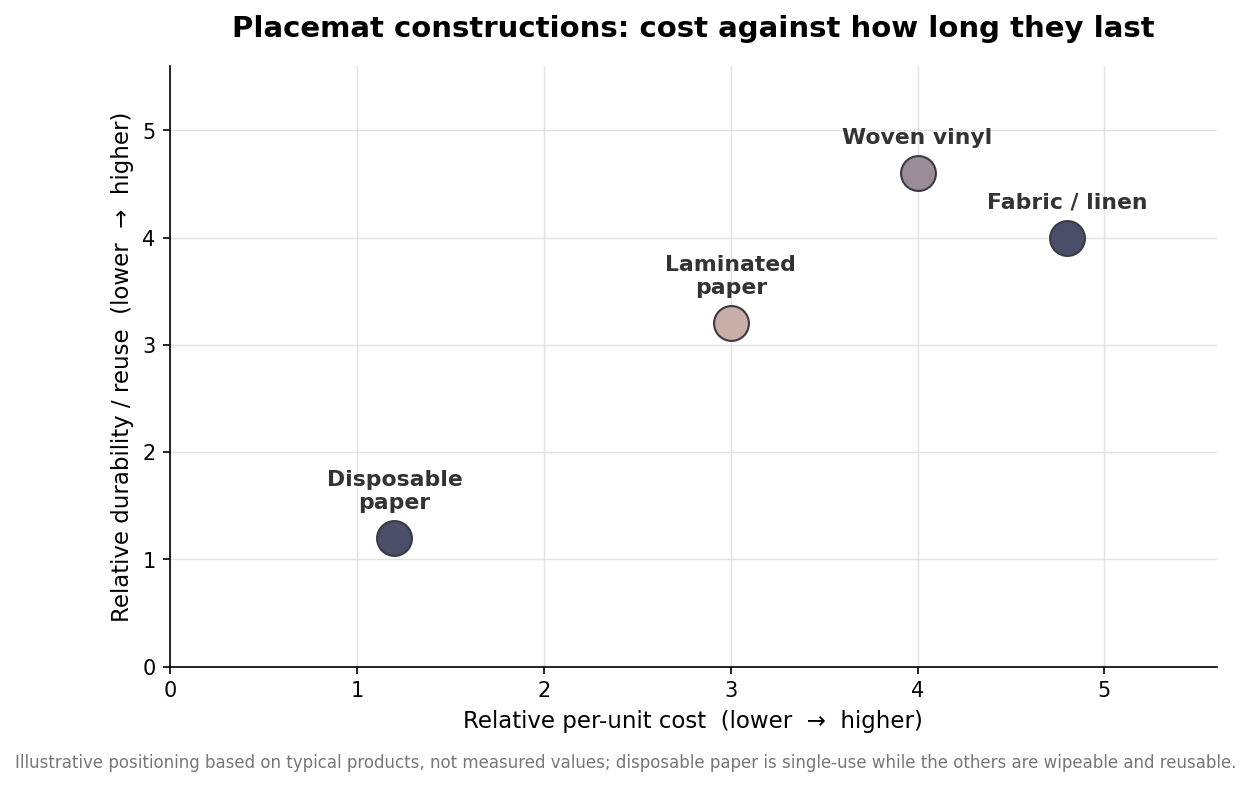
The honest way to decide is to stop comparing sticker prices and start comparing cost per use against the lifespan you actually need. Disposable paper wins decisively when the message changes often or the mat is part of the marketing, because a low unit cost and a fresh print every time is the whole point. Laminated paper is the middle ground for a stable design you want to keep on the table for a while. Vinyl and fabric make sense when the mat is part of the furniture and will be reused far more than it is replaced. The positioning chart below sketches how the four constructions trade off cost against durability; treat it as an illustrative map based on typical products rather than exact figures, since real prices and lifespans vary widely by supplier, print method, and how hard the mats are used. Start from how the mat will be handled between guests, and the right material usually picks itself.