A restaurant placemat is the rare piece of print a customer stares at for the length of an entire meal. That captive attention is worth designing for deliberately, whether you are a restaurant filling the space with your own menu and story or a print buyer building placemats that sell advertising slots to local businesses. The difference between a mat that just catches crumbs and one that earns its keep comes down to three things: the footprint you choose, how you divide that footprint into zones, and whether the numbers behind the ad model actually work. Here is how to think through each.
Start With the Size and the Plate
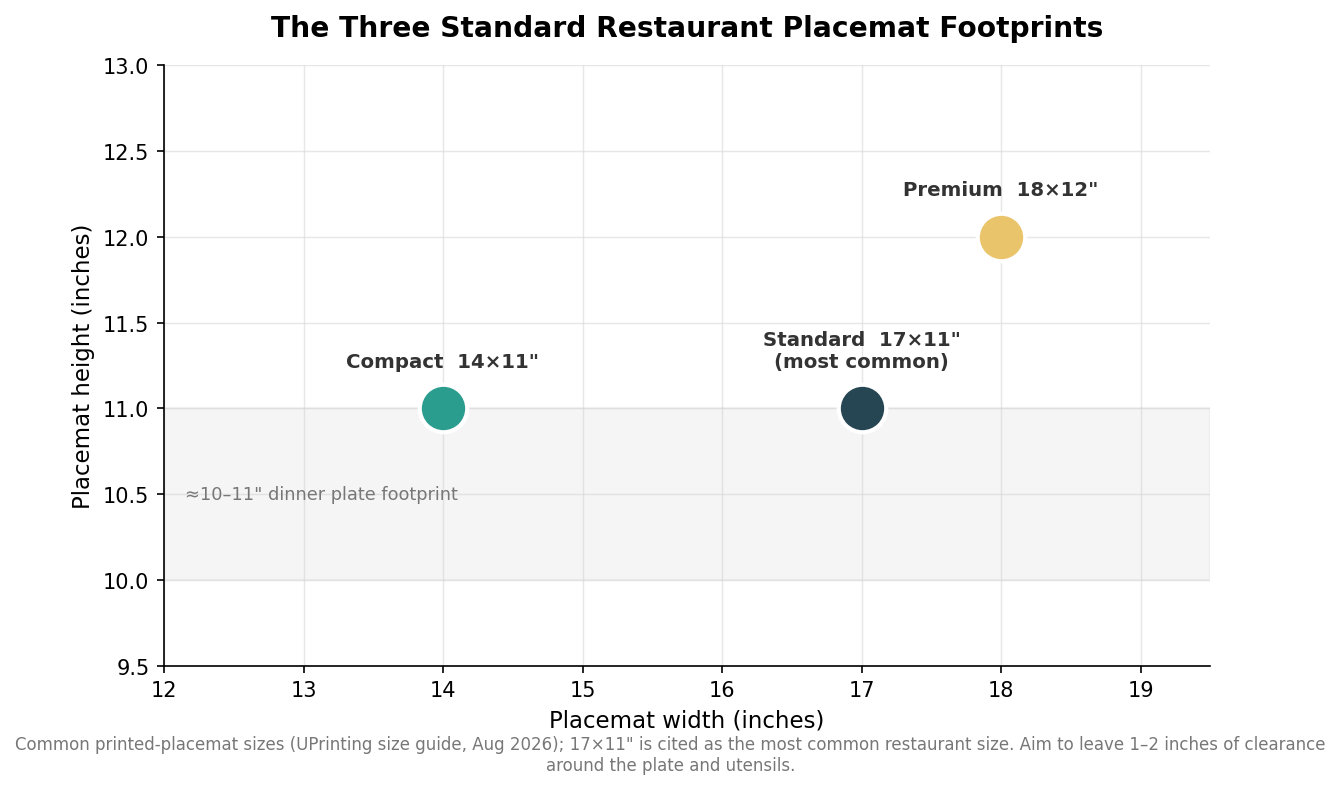
The footprint sets your whole canvas, so pick it against the table and the plate, not in the abstract. Printed placemats cluster into three standard sizes. The compact 14 by 11 inch mat suits small cafes and bars where tables are tight. The 17 by 11 inch mat is the most common restaurant size because it fits most dining setups while leaving real room for design. The larger 18 by 12 inch premium size fits upscale and buffet settings where the table can carry it. A useful rule when choosing is to leave one to two inches of clearance around the plate and utensils, since a typical dinner plate runs about 10 to 11 inches; crowd that margin and your artwork disappears the moment food arrives.
Map the Placemat Into Zones
Once the size is set, resist the urge to fill it edge to edge. The center of the mat, roughly the middle third, sits under the plate for most of the meal and is the worst place for anything you need read. Treat that center as branding or a light background pattern, and push the content that must be seen out to the top, bottom and side margins that stay visible around the plate. For a restaurant’s own mat, that usually means the logo and a tagline across the top, a compact menu or daily specials down one side, and a footer for hours, the website and a QR code.
For an advertising mat, the same logic turns the visible border into inventory. A common layout rings the perimeter with a grid of equal advertiser boxes, keeps a house block for the restaurant, and reserves the center for a neutral design or a light activity like a puzzle that keeps diners looking down at the mat. Deciding the zone map before you sell or design a single box keeps every element in a spot where it will actually be seen, and keeps the mat from turning into an unreadable wall of boxes.
The Numbers Behind the Ad-Space Model
The placemat advertising model works because the exposure is long and captive, even though the raw reach is modest. Industry estimates put a busy restaurant at roughly 300 to 500 diners a day, each spending something like 15 to 30 minutes looking at or around the mat while they wait and eat. That sustained, low-distraction attention is very different from a billboard glimpsed at speed, and it is the reason a small local advertiser will pay to sit on the border of a mat in a restaurant their customers already visit.
Where the model really stands out is cost efficiency. Placemat advertising trades raw reach for a low cost per impression and a long dwell time, and the exact numbers vary by market and traffic. If you are pitching slots to local businesses, that low cost per impression paired with a genuinely captive audience is the core of the argument.
Pricing and Selling the Slots
Translate reach into a slot price the restaurant and the advertisers both accept. Build the price from the specific restaurant’s real daily count rather than a national average, because a diner doing 500 covers a day is worth far more per box than a quiet cafe. Offer a small number of tiers, weight the corners and the top border as premium positions since the eye lands there first, and sell the house block value back to the restaurant as part of the deal.
Whatever you charge, keep the slot count honest. A mat crammed with twenty tiny ads devalues every one of them and reads as clutter, while a cleaner ring of six to ten well-set boxes holds attention and lets you charge more per slot. The math only works if advertisers renew, and they renew when the design actually delivered the eyeballs you promised.
Design Rules That Keep It Readable
None of the strategy survives a mat that is hard to read or falls apart during a meal. Set type with strong contrast and a minimum body size around 8 points, because a placemat is read in low restaurant light at arm’s length. Keep a consistent grid so advertiser boxes line up rather than fighting each other, and give every element a little breathing room. On the production side, remember the mat will meet water, grease and a hot plate, so a coated or lightly finished stock resists staining and keeps ink legible to the last bite. Design for the conditions of a real table, and the placemat earns the attention it is guaranteed to get.